Ejercicio 1.1 · Inglés PAU Galicia Extraordinaria (2ª lengua extranjera) 2025
Tema: Verdadero, falso o no se dice, con cita del texto (True/False/Not Given) · Del examen Extraordinaria (2ª lengua extranjera) (2025)
Enunciado
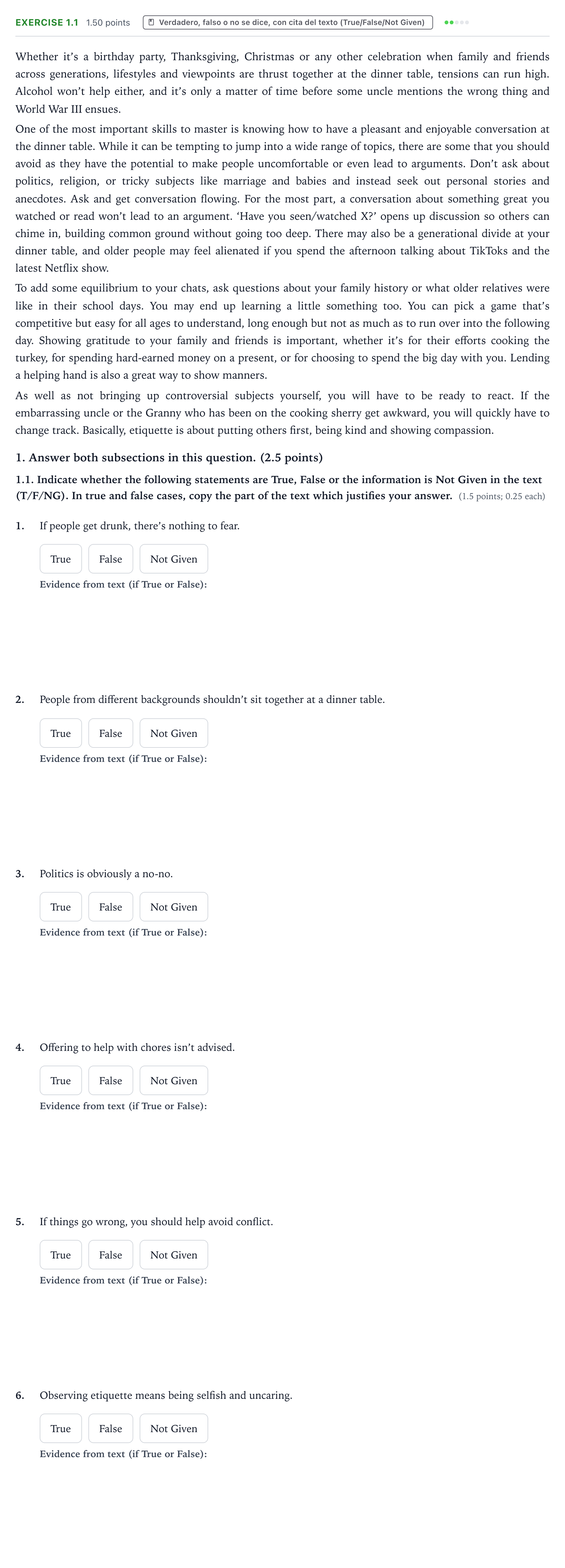
Whether it’s a birthday party, Thanksgiving, Christmas or any other celebration when family and friends across generations, lifestyles and viewpoints are thrust together at the dinner table, tensions can run high. Alcohol won’t help either, and it’s only a matter of time before some uncle mentions the wrong thing and World War III ensues.
One of the most important skills to master is knowing how to have a pleasant and enjoyable conversation at the dinner table. While it can be tempting to jump into a wide range of topics, there are some that you should avoid as they have the potential to make people uncomfortable or even lead to arguments. Don’t ask about politics, religion, or tricky subjects like marriage and babies and instead seek out personal stories and anecdotes. Ask and get conversation flowing. For the most part, a conversation about something great you watched or read won’t lead to an argument. ‘Have you seen/watched X?’ opens up discussion so others can chime in, building common ground without going too deep. There may also be a generational divide at your dinner table, and older people may feel alienated if you spend the afternoon talking about TikToks and the latest Netflix show.
To add some equilibrium to your chats, ask questions about your family history or what older relatives were like in their school days. You may end up learning a little something too. You can pick a game that’s competitive but easy for all ages to understand, long enough but not as much as to run over into the following day. Showing gratitude to your family and friends is important, whether it’s for their efforts cooking the turkey, for spending hard-earned money on a present, or for choosing to spend the big day with you. Lending a helping hand is also a great way to show manners.
As well as not bringing up controversial subjects yourself, you will have to be ready to react. If the embarrassing uncle or the Granny who has been on the cooking sherry get awkward, you will quickly have to change track. Basically, etiquette is about putting others first, being kind and showing compassion.
1. Answer both subsections in this question. (2.5 points)
1.1. Indicate whether the following statements are True, False or the information is Not Given in the text (T/F/NG). In true and false cases, copy the part of the text which justifies your answer. (1.5 points; 0.25 each)
1.
If people get drunk, there’s nothing to fear.
True
False
Not Given
2.
People from different backgrounds shouldn’t sit together at a dinner table.
True
False
Not Given
3.
Politics is obviously a no-no.
True
False
Not Given
4.
Offering to help with chores isn’t advised.
True
False
Not Given
5.
If things go wrong, you should help avoid conflict.
True
False
Not Given
6.
Observing etiquette means being selfish and uncaring.
True
False
Not Given
Solución
Según los criterios oficiales de corrección
1. If people get drunk, there’s nothing to fear.
Solución: False
Evidence: 1. If people get drunk, there’s nothing to fear.
Solución: “Alcohol won’t help either, and it’s only a matter of time before some uncle mentions the wrong thing and World War III ensues.”
2. People from different backgrounds shouldn’t sit together at a dinner table.
Solución: Not Given
Evidence: 2. People from different backgrounds shouldn’t sit together at a dinner table.
Solución: Not Given (no justification required)
3. Politics is obviously a no-no.
Solución: True
Evidence: 3. Politics is obviously a no-no.
Solución: “Don’t ask about politics, religion, or tricky subjects like marriage and babies...”
4. Offering to help with chores isn’t advised.
Solución: False
Evidence: 4. Offering to help with chores isn’t advised.
Solución: “Lending a helping hand is also a great way to show manners.”
5. If things go wrong, you should help avoid conflict.
Solución: True
Evidence: 5. If things go wrong, you should help avoid conflict.
Solución: “If the embarrassing uncle or the Granny who has been on the cooking sherry get awkward, you will quickly have to change track.”
6. Observing etiquette means being selfish and uncaring.
Solución: False
Evidence: 6. Observing etiquette means being selfish and uncaring.
Solución: “Basically, etiquette is about putting others first, being kind and showing compassion.”
La explicación paso a paso, hecha con IA, es Premium. Premium
Resuélvelo aquí mismo: corrección automática, pistas y solución paso a paso.
‹ Ejercicio 1.1 · Extraordinaria 2025 · Ejercicio 1.1 · Ordinaria 2025 ›
Más ejercicios de Verdadero, falso o no se dice, con cita del texto (True/False/Not Given)
- Ejercicio 1.1 · Extraordinaria 2026
- Ejercicio 1.1 · Extraordinaria (2ª lengua extranjera) 2026
- Ejercicio 1.1 · Ordinaria 2026
- Ejercicio 1.1 · Ordinaria (2ª lengua extranjera) 2026
- Ejercicio 1.1 · Extraordinaria 2025
- Ejercicio 1.1 · Ordinaria 2025
- Ejercicio 1.1 · Ordinaria (2ª lengua extranjera) 2025
- Ejercicio 1.1 · Extraordinaria 2024
- Ejercicio 2.1 · Extraordinaria 2024
- Ejercicio 1.1 · Extraordinaria (2ª lengua extranjera) 2024