Ejercicio 1 - Text B - Cuestiones 1 a 4 · Inglés PAU Asturias Ordinaria (2ª lengua extranjera) 2025
Tema: Preguntas de comprensión con tus propias palabras (Questions on the text) · Del examen Ordinaria (2ª lengua extranjera) (2025)
Enunciado
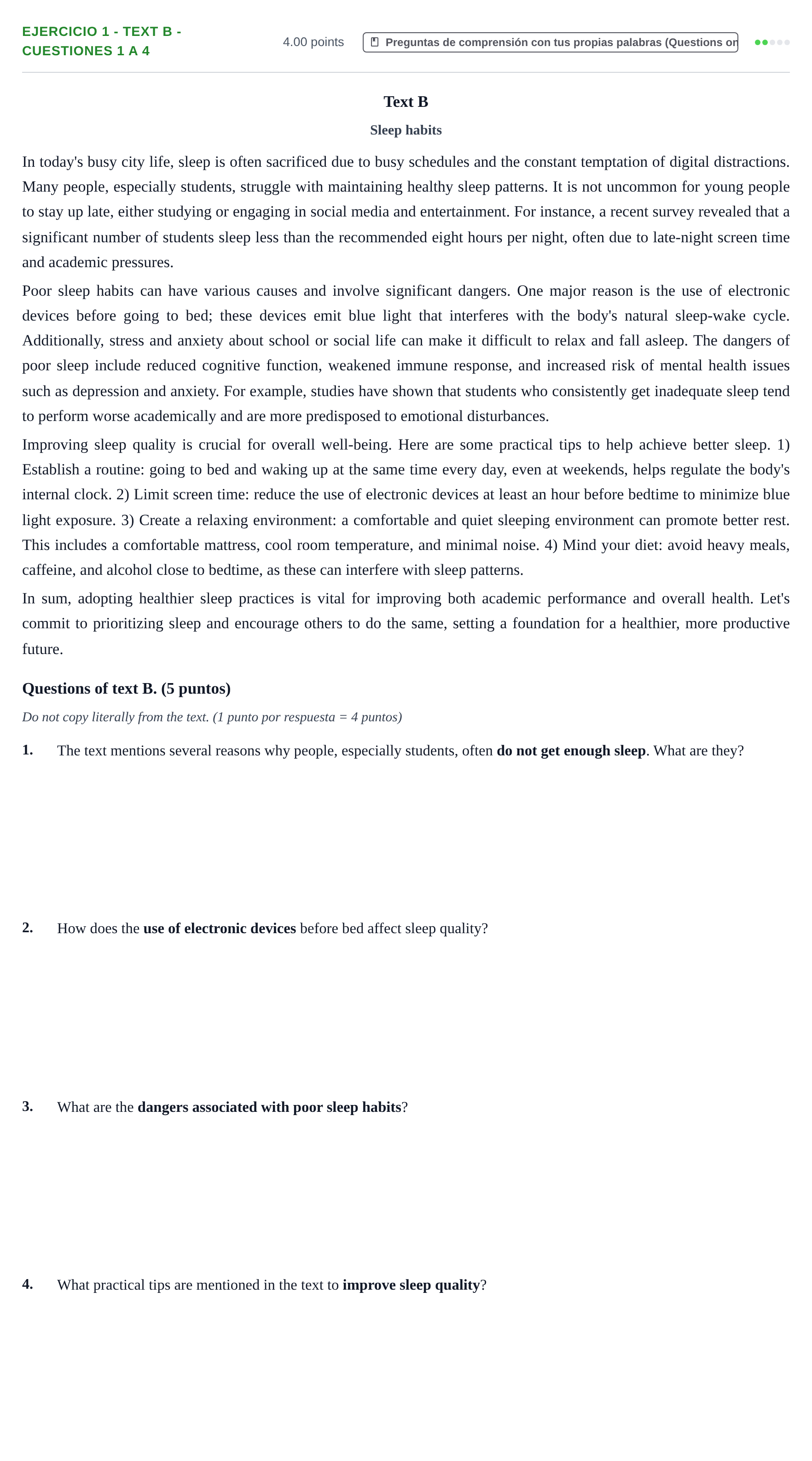
Text B
Sleep habits
In today's busy city life, sleep is often sacrificed due to busy schedules and the constant temptation of digital distractions. Many people, especially students, struggle with maintaining healthy sleep patterns. It is not uncommon for young people to stay up late, either studying or engaging in social media and entertainment. For instance, a recent survey revealed that a significant number of students sleep less than the recommended eight hours per night, often due to late-night screen time and academic pressures.
Poor sleep habits can have various causes and involve significant dangers. One major reason is the use of electronic devices before going to bed; these devices emit blue light that interferes with the body's natural sleep-wake cycle. Additionally, stress and anxiety about school or social life can make it difficult to relax and fall asleep. The dangers of poor sleep include reduced cognitive function, weakened immune response, and increased risk of mental health issues such as depression and anxiety. For example, studies have shown that students who consistently get inadequate sleep tend to perform worse academically and are more predisposed to emotional disturbances.
Improving sleep quality is crucial for overall well-being. Here are some practical tips to help achieve better sleep. 1) Establish a routine: going to bed and waking up at the same time every day, even at weekends, helps regulate the body's internal clock. 2) Limit screen time: reduce the use of electronic devices at least an hour before bedtime to minimize blue light exposure. 3) Create a relaxing environment: a comfortable and quiet sleeping environment can promote better rest. This includes a comfortable mattress, cool room temperature, and minimal noise. 4) Mind your diet: avoid heavy meals, caffeine, and alcohol close to bedtime, as these can interfere with sleep patterns.
In sum, adopting healthier sleep practices is vital for improving both academic performance and overall health. Let's commit to prioritizing sleep and encourage others to do the same, setting a foundation for a healthier, more productive future.
Questions of text B. (5 puntos)
Do not copy literally from the text. (1 punto por respuesta = 4 puntos)
1.
The text mentions several reasons why people, especially students, often do not get enough sleep. What are they?
2.
How does the use of electronic devices before bed affect sleep quality?
3.
What are the dangers associated with poor sleep habits ?
4.
What practical tips are mentioned in the text to improve sleep quality ?
Solución
Según los criterios oficiales de corrección
1. The text mentions several reasons why people, especially students, often do not get enough sleep. What are they?
Solución: Many people, especially students, do not get enough sleep because they are busy with schoolwork, stay up late using their phones or computers, and have a lot of social activities to fit in.
2. How does the use of electronic devices before bed affect sleep quality?
Solución: Using electronic devices before bed can make it harder to sleep because they give off a type of light that can confuse your body's natural internal clock (or can stop your bodies from getting ready for sleep).
3. What are the dangers associated with poor sleep habits?
Solución: Poor sleep habits can lead to reduced cognitive abilities, a weakened immune system, and a higher risk of mental health issues like depression and anxiety. For example, students who do not get enough sleep often perform poorly in school and may experience emotional problems.
4. What practical tips are mentioned in the text to improve sleep quality?
Solución: To improve sleep quality, the text suggests maintaining a consistent sleep schedule, limiting screen time before bed, creating a comfortable and quiet sleeping environment, and avoiding heavy meals, caffeine, and alcohol close to bedtime.
La explicación paso a paso, hecha con IA, es Premium. Premium
Resuélvelo aquí mismo: corrección automática, pistas y solución paso a paso.
‹ Ejercicio 1 - Text A - Cuestiones 1 a 4 · Ordinaria (2ª lengua extranjera) 2025 · Ejercicio Texto 1 - Cuestiones 1-4 · Extraordinaria 2024 ›
Más ejercicios de Preguntas de comprensión con tus propias palabras (Questions on the text)
- Ejercicio 1 - Text A - Questions 1-4 · Extraordinaria (2ª lengua extranjera) 2025
- Ejercicio 1 - Text B - Questions 1-4 · Extraordinaria (2ª lengua extranjera) 2025
- Ejercicio 1 - Text A (Questions 1-4) · Ordinaria 2025
- Ejercicio 1 - Text B (Questions 1-4) · Ordinaria 2025
- Ejercicio 1 - Text A - Cuestiones 1 a 4 · Ordinaria (2ª lengua extranjera) 2025
- Ejercicio Texto 1 - Cuestiones 1-4 · Extraordinaria 2024
- Ejercicio Texto 2 - Cuestiones 1-4 · Extraordinaria 2024
- Ejercicio Texto 1 - Cuestiones 1-4 · Extraordinaria (2ª lengua extranjera) 2024
- Ejercicio Texto 2 - Cuestiones 1-4 · Extraordinaria (2ª lengua extranjera) 2024
- Ejercicio Texto 1 - Cuestiones 1 a 4 · Ordinaria 2024