Ejercicio 1 - Opción A - Cuestión 5 · Inglés PAU Asturias Extraordinaria 2026
Tema: Texto con huecos: una palabra por hueco (Fill the gaps) · Del examen Extraordinaria (2026)
Enunciado
Opción A - Text A
Tablets in classrooms: from promise to problem
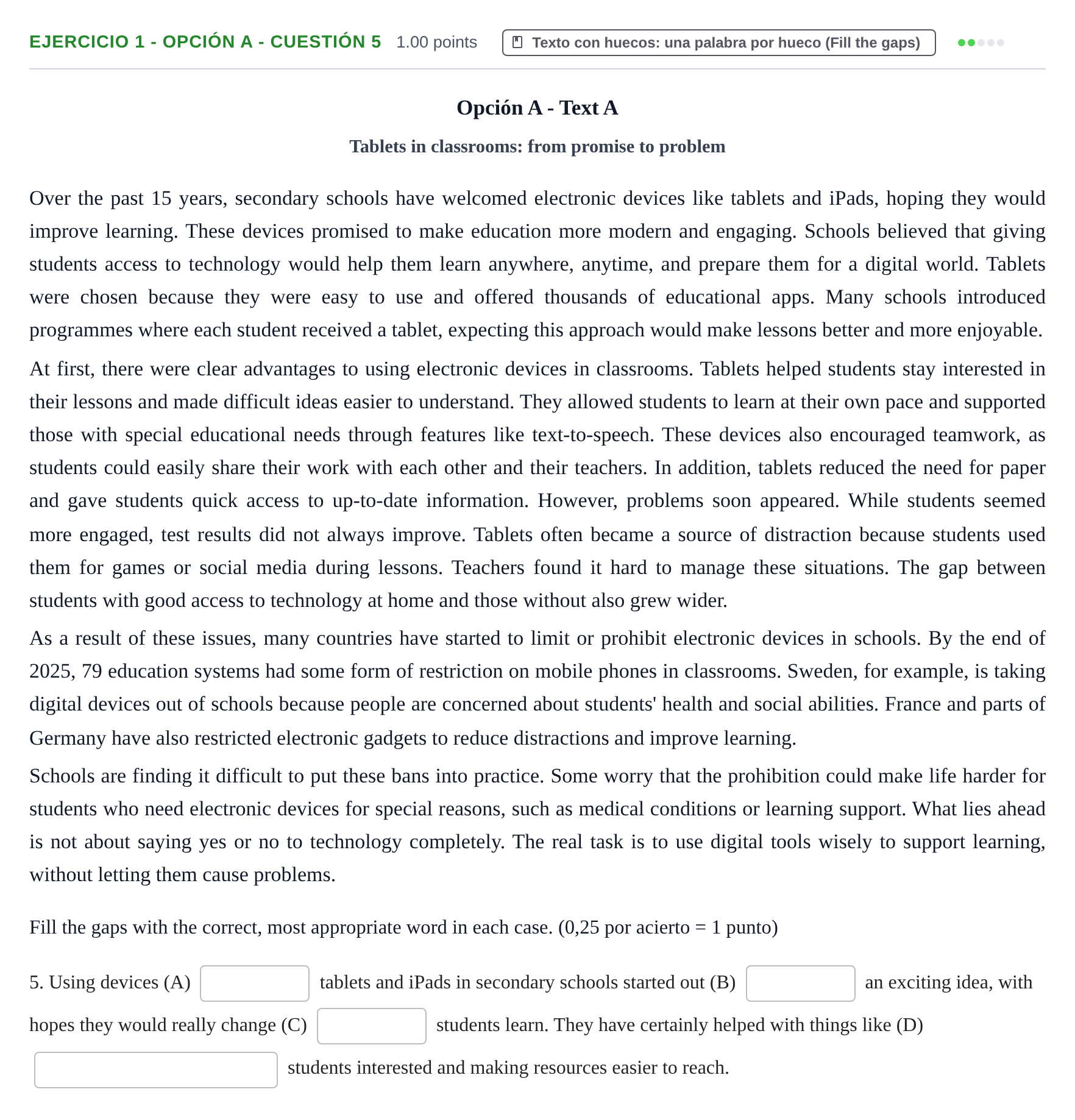
Over the past 15 years, secondary schools have welcomed electronic devices like tablets and iPads, hoping they would improve learning. These devices promised to make education more modern and engaging. Schools believed that giving students access to technology would help them learn anywhere, anytime, and prepare them for a digital world. Tablets were chosen because they were easy to use and offered thousands of educational apps. Many schools introduced programmes where each student received a tablet, expecting this approach would make lessons better and more enjoyable.
At first, there were clear advantages to using electronic devices in classrooms. Tablets helped students stay interested in their lessons and made difficult ideas easier to understand. They allowed students to learn at their own pace and supported those with special educational needs through features like text-to-speech. These devices also encouraged teamwork, as students could easily share their work with each other and their teachers. In addition, tablets reduced the need for paper and gave students quick access to up-to-date information. However, problems soon appeared. While students seemed more engaged, test results did not always improve. Tablets often became a source of distraction because students used them for games or social media during lessons. Teachers found it hard to manage these situations. The gap between students with good access to technology at home and those without also grew wider.
As a result of these issues, many countries have started to limit or prohibit electronic devices in schools. By the end of 2025, 79 education systems had some form of restriction on mobile phones in classrooms. Sweden, for example, is taking digital devices out of schools because people are concerned about students' health and social abilities. France and parts of Germany have also restricted electronic gadgets to reduce distractions and improve learning.
Schools are finding it difficult to put these bans into practice. Some worry that the prohibition could make life harder for students who need electronic devices for special reasons, such as medical conditions or learning support. What lies ahead is not about saying yes or no to technology completely. The real task is to use digital tools wisely to support learning, without letting them cause problems.
Fill the gaps with the correct, most appropriate word in each case. (0,25 por acierto = 1 punto)
5. Using devices (A)
tablets and iPads in secondary schools started out (B)
an exciting idea, with hopes they would really change (C)
students learn. They have certainly helped with things like (D)
students interested and making resources easier to reach.
Solución
Según los criterios oficiales de corrección
Using devices (A) _____ tablets and iPads...
Solución: like
...started out (B) _____ an exciting idea...
Solución: as
...with hopes they would really change (C) _____ students learn.
Solución: how
...things like (D) _____ students interested...
Solución: keeping / getting
La explicación paso a paso, hecha con IA, es Premium. Premium
Resuélvelo aquí mismo: corrección automática, pistas y solución paso a paso.
Ejercicio 1 - Opción B - Cuestión 5 · Extraordinaria 2026 ›
Más ejercicios de Texto con huecos: una palabra por hueco (Fill the gaps)
- Ejercicio 1 - Opción B - Cuestión 5 · Extraordinaria 2026
- Ejercicio 1 - Opción A (Question 5) · Ordinaria 2026
- Ejercicio 1 - Opción B (Question 5) · Ordinaria 2026
- Ejercicio 1 - Opción A (Cuestión 5) · Ordinaria (2ª lengua extranjera) 2026
- Ejercicio 1 - Opción B (Cuestión 5) · Ordinaria (2ª lengua extranjera) 2026
- Ejercicio 1 - Text A - Question 5 · Extraordinaria 2025
- Ejercicio 1 - Text B - Question 5 · Extraordinaria 2025
- Ejercicio 1 - Text A - Question 5 · Extraordinaria (2ª lengua extranjera) 2025
- Ejercicio 1 - Text B - Question 5 · Extraordinaria (2ª lengua extranjera) 2025
- Ejercicio 1 - Text A (Question 5) · Ordinaria 2025