Problema 1 · Inglés PAU Navarra Ordinaria 2026
Tema: Preguntas abiertas con tus propias palabras (Answer the questions) · Del examen Ordinaria (2026)
Enunciado
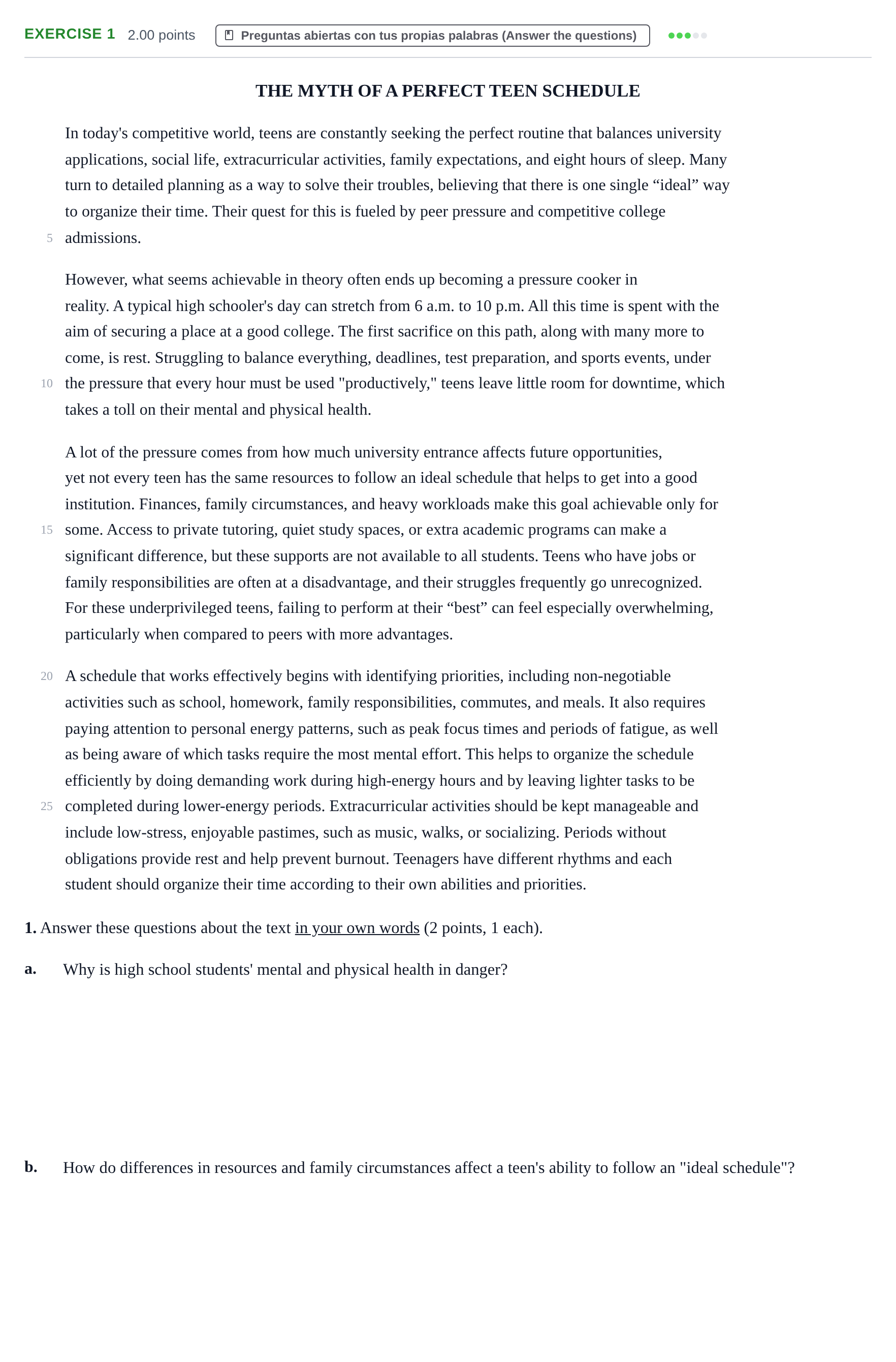
THE MYTH OF A PERFECT TEEN SCHEDULE
In today's competitive world, teens are constantly seeking the perfect routine that balances university
applications, social life, extracurricular activities, family expectations, and eight hours of sleep. Many
turn to detailed planning as a way to solve their troubles, believing that there is one single “ideal” way
to organize their time. Their quest for this is fueled by peer pressure and competitive college
admissions. 5
However, what seems achievable in theory often ends up becoming a pressure cooker in
reality. A typical high schooler's day can stretch from 6 a.m. to 10 p.m. All this time is spent with the
aim of securing a place at a good college. The first sacrifice on this path, along with many more to
come, is rest. Struggling to balance everything, deadlines, test preparation, and sports events, under
the pressure that every hour must be used "productively," teens leave little room for downtime, which 10
takes a toll on their mental and physical health.
A lot of the pressure comes from how much university entrance affects future opportunities,
yet not every teen has the same resources to follow an ideal schedule that helps to get into a good
institution. Finances, family circumstances, and heavy workloads make this goal achievable only for
some. Access to private tutoring, quiet study spaces, or extra academic programs can make a 15
significant difference, but these supports are not available to all students. Teens who have jobs or
family responsibilities are often at a disadvantage, and their struggles frequently go unrecognized.
For these underprivileged teens, failing to perform at their “best” can feel especially overwhelming,
particularly when compared to peers with more advantages.
A schedule that works effectively begins with identifying priorities, including non-negotiable 20
activities such as school, homework, family responsibilities, commutes, and meals. It also requires
paying attention to personal energy patterns, such as peak focus times and periods of fatigue, as well
as being aware of which tasks require the most mental effort. This helps to organize the schedule
efficiently by doing demanding work during high-energy hours and by leaving lighter tasks to be
completed during lower-energy periods. Extracurricular activities should be kept manageable and 25
include low-stress, enjoyable pastimes, such as music, walks, or socializing. Periods without
obligations provide rest and help prevent burnout. Teenagers have different rhythms and each
student should organize their time according to their own abilities and priorities.
1. Answer these questions about the text in your own words (2 points, 1 each).
a.
Why is high school students' mental and physical health in danger?
b.
How do differences in resources and family circumstances affect a teen's ability to follow an "ideal schedule"?
Solución
Solución de AprenAI (no es la oficial)
a. Why is high school students' mental and physical health in danger?
Solución: High school students' health suffers because they face extremely long daily routines filled with academic and extracurricular demands. In trying to build a competitive college application and use every hour productively, they sacrifice sleep and rest, leaving virtually no time to relax and recover.
La solución del apartado que falta y la explicación paso a paso son Premium. Premium
Resuélvelo aquí mismo: corrección automática, pistas y solución paso a paso.
‹ Problema 1 · Extraordinaria 2026 · Problema 1 · Extraordinaria 2025 ›
Más ejercicios de Preguntas abiertas con tus propias palabras (Answer the questions)
- Problema 1 · Extraordinaria 2026
- Problema 1 · Extraordinaria 2025
- Problema 1 · Ordinaria 2025
- Opción A - 1 · Extraordinaria 2024
- Opción B - 1 · Extraordinaria 2024
- Opción B - 1 · Ordinaria 2024
- Opción A - 1 · Ordinaria 2024
- Opción A - 1 · Extraordinaria 2023
- Opción B - 1 · Extraordinaria 2023
- Opción A - 1 · Ordinaria 2023