Problema 2 · Inglés PAU Madrid Ordinaria 12:00 2026
Tema: Comprensión Lectora · Del examen Ordinaria 12:00 (2026)
Enunciado
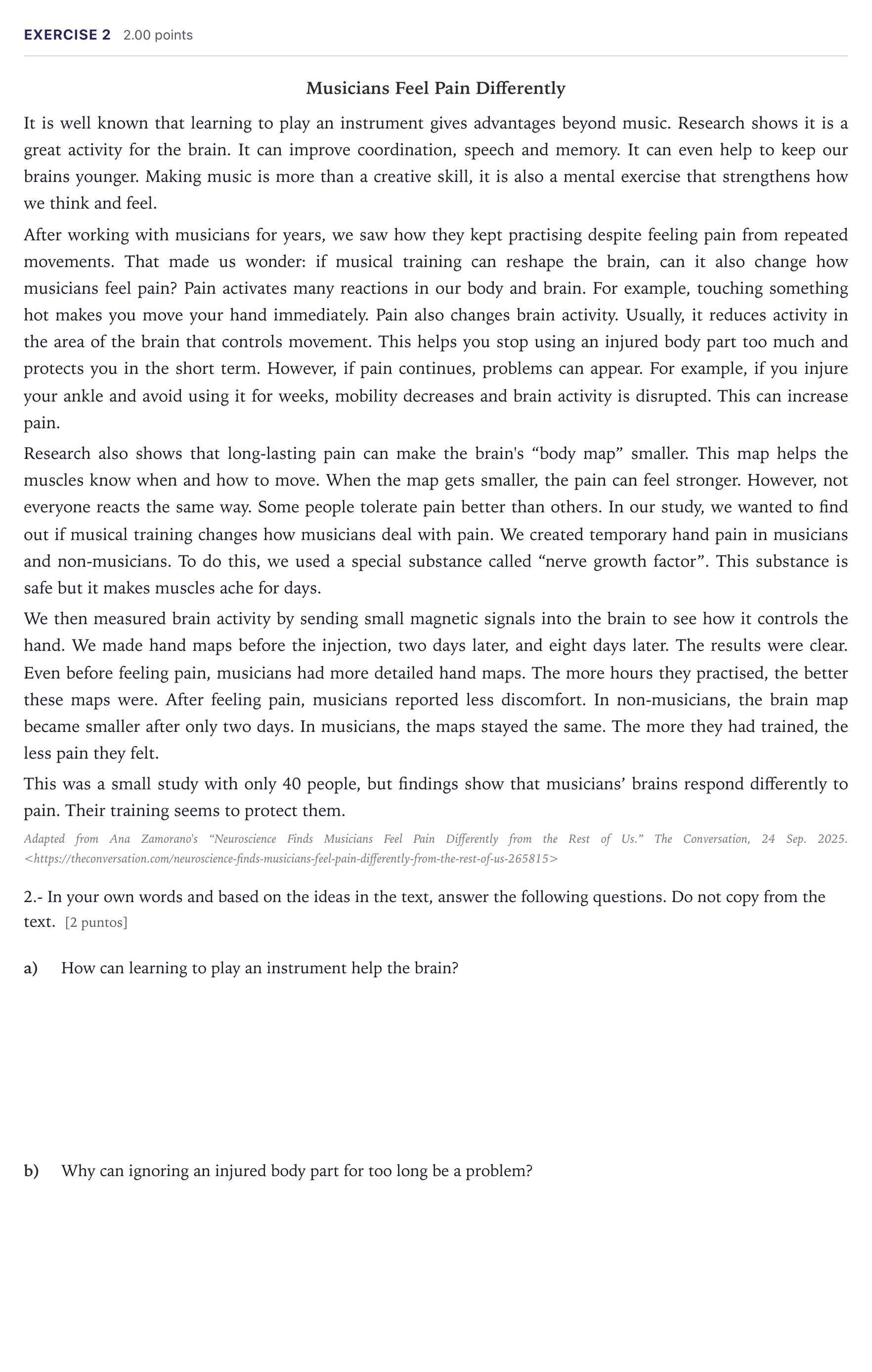
Musicians Feel Pain Differently
It is well known that learning to play an instrument gives advantages beyond music. Research shows it is a great activity for the brain. It can improve coordination, speech and memory. It can even help to keep our brains younger. Making music is more than a creative skill, it is also a mental exercise that strengthens how we think and feel.
After working with musicians for years, we saw how they kept practising despite feeling pain from repeated movements. That made us wonder: if musical training can reshape the brain, can it also change how musicians feel pain? Pain activates many reactions in our body and brain. For example, touching something hot makes you move your hand immediately. Pain also changes brain activity. Usually, it reduces activity in the area of the brain that controls movement. This helps you stop using an injured body part too much and protects you in the short term. However, if pain continues, problems can appear. For example, if you injure your ankle and avoid using it for weeks, mobility decreases and brain activity is disrupted. This can increase pain.
Research also shows that long-lasting pain can make the brain's “body map” smaller. This map helps the muscles know when and how to move. When the map gets smaller, the pain can feel stronger. However, not everyone reacts the same way. Some people tolerate pain better than others. In our study, we wanted to find out if musical training changes how musicians deal with pain. We created temporary hand pain in musicians and non-musicians. To do this, we used a special substance called “nerve growth factor”. This substance is safe but it makes muscles ache for days.
We then measured brain activity by sending small magnetic signals into the brain to see how it controls the hand. We made hand maps before the injection, two days later, and eight days later. The results were clear. Even before feeling pain, musicians had more detailed hand maps. The more hours they practised, the better these maps were. After feeling pain, musicians reported less discomfort. In non-musicians, the brain map became smaller after only two days. In musicians, the maps stayed the same. The more they had trained, the less pain they felt.
This was a small study with only 40 people, but findings show that musicians’ brains respond differently to pain. Their training seems to protect them.
Adapted from Ana Zamorano's “Neuroscience Finds Musicians Feel Pain Differently from the Rest of Us.” The Conversation, 24 Sep. 2025. <https://theconversation.com/neuroscience-finds-musicians-feel-pain-differently-from-the-rest-of-us-265815>
2.- In your own words and based on the ideas in the text, answer the following questions. Do not copy from the text. [2 puntos]
a)
How can learning to play an instrument help the brain?
b)
Why can ignoring an injured body part for too long be a problem?
Solución
Según los criterios oficiales de corrección
a) How can learning to play an instrument help the brain?
Solución: It can help with movement, speaking, memory and keeping the mind active.
b) Why can ignoring an injured body part for too long be a problem?
Solución: Because if you ignore it, the problem can get worse.
La explicación paso a paso, hecha con IA, es Premium. Premium
Resuélvelo aquí mismo: corrección automática, pistas y solución paso a paso.
‹ Problema 1 · Ordinaria 12:00 2026 · Problema 1 · Ordinaria 9:30 2026 ›
Más ejercicios de Comprensión Lectora
- Problema 1 · Ordinaria (2ª lengua) 2026
- Problema 2 · Ordinaria (2ª lengua) 2026
- Problema 1 · Ordinaria (2ª lengua) Coincidencias 2026
- Problema 2 · Ordinaria (2ª lengua) Coincidencias 2026
- Problema 1 · Ordinaria 12:00 2026
- Problema 1 · Ordinaria 9:30 2026
- Problema 2 · Ordinaria 9:30 2026
- Problema 1 · Extraordinaria 2025
- Problema 2 · Extraordinaria 2025
- Problema 1 · Modelo 2025